SHAPE America Distinguished Lecture Series
Each year, the Distinguished Lecture Series is one of the highlights of the extensive research program at SHAPE America's National Convention & Expo. Each of the four lectures provides the opportunity for in-depth coverage of a relevant topic, as well as formal peer recognition of outstanding
scholars and leaders in the field.
View the #SHAPEKC final program for the location of each lecture.
The Daryl Siedentop Scholar Lecture is presented in recognition of research/creative activities which enrich the depth and scope of health, leisure, sport, dance and related activities.
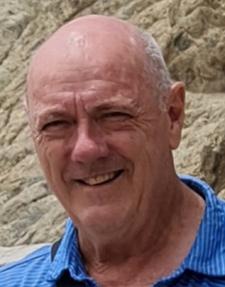
The Curse of the Short Unit
Wednesday, April 2 | 8- 9 a.m.
In this presentation, I will spend a majority of time breaking down and supporting with scientific evidence how longer units are the only means we can use to legitimately achieve any physical education standards no matter the iteration of the standards document.
This will be done through the presentation of a series of scientific results that counter the claims made by teachers as to why they cannot extend the time allocated to individual units.
Sample myths to be debunked include “there is not enough time,” “kids get bored,” “curriculum restrictions,” and “outdated PETE program designs.”
More insidious topics include teachers as science ignorers, the comfort of “easy street,” lack of teacher content knowledge, and the oft self-inflicted marginalization of physical education in schools.
Peter Hastie is a Wayne T. Smith Distinguished Professor and Alumni Professor in the School of Kinesiology at Auburn University. He has published 10 books, 19 book chapters, and over 250 scholarly papers.
His body of work over his career has him listed by “ScholarGPS” as its #2 ranked lifetime scholar in the category of physical education.
Dr. Hastie has presented keynote speeches in over 10 countries, and has presented scholar or honor award lectures for the following associations: British Educational Research Association, American Educational Research Association, and SHAPE America.
The C. H. McCloy Memorial Lecture provides for in-depth coverage of a research topic and an opportunity to give formal peer recognition to persons who have made outstanding contributions to HPERD through their research efforts. The lecture also provides a form of continuing recognition for Charles H. McCloy, one of the great pioneer scientists and leaders of the profession. The C. H. McCloy Research Lecture was inaugurated at the 1980 National Convention and Exposition.
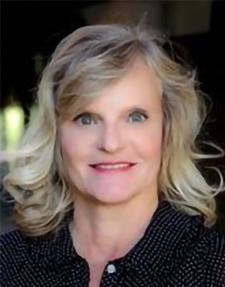
Keeping Movement as the Movement: Honoring the Legacy of C.H. McCloy Through a Whole-of-School Health Lens
Wednesday, April 2 | 4:30- 5:30 p.m.
C.H. McCloy’s pioneering work as a physical educator included promoting physical activity supportive of physical fitness that is accessible to everyone everywhere. His legacy extends well beyond the physical education classroom and has led to the whole-of-school health movement in schools. Examples of successful whole-of-school health models with outcomes for students (e.g., physical activity, leadership, knowledge, motor skills, attitudes, social skills, antibullying skills) and teachers as well as ideas for sustainable movement programming and research in schools will be presented for all school levels.
Pamela Hodges Kulinna is a professor in Mary Lou Fulton Teachers College at Arizona State University. Her doctoral training was completed at the University of Illinois in Kinesiology with a specialization in Physical Education Pedagogy. Her M.S. and B.S. degrees in Physical Education and Human Movement Studies were completed at the University of Oregon. Dr. Kulinna is a member of the National Academy of Kinesiology (#508). She is also a research fellow in the Internationale des Ecoles Supérieures d'Education Physique - International Association for Physical Education in Higher Education and SHAPE America – Society of Health and Physical Educators.
Professor Kulinna is an international leader in the field of Physical Education Pedagogy and healthy and active schools. She has more than 200 peer-reviewed journal articles, numerous book chapters, and more than 250 national/international presentations, including invited presentations in Australia, Korea, New Zealand, China and the United States. She has been the PI on 20 research projects. Professor Kulinna has served as the co-editor of the Journal of Teaching in Physical Education and reviews for several other Physical Education, education, and Kinesiology focused journals.
The purpose of the Raymond A. Weiss Lecture is to support a scholarly presentation by an individual in the arts and sciences who is an outstanding leader and who has made an important contribution to his or her field, and who has ties to one or more of the fields of HPERD.
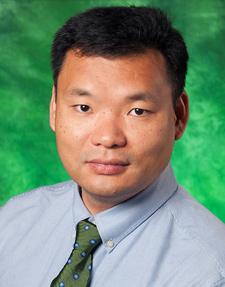
Creating Conditions for Movement: Motivation, Environment and AI-Enabled School Physical Activity
Thursday, April 3 | 2-3 p.m.
Physical activity (PA) behaviors are shaped by the motivational experiences students encounter and the environments in which they play and grow. Drawing on decades of research in motivation, school PA programs, and social ecological theory, this lecture reflects on how schools can move beyond promoting PA to creating conditions that support meaningful movement for students. The lecture will examine how motivational processes interact with instructional practices, environments and technologies to jointly influence PA. Using evidence from school-based interventions, the presentation will highlight how individual-level motivation is both enabled and constrained by broader ecological factors operating within the school setting.
The lecture further explores the emerging role of AI-enabled school PA systems in supporting this systems-level approach. Tools such as wearable sensors, adaptive platforms, and real-time analytics can help personalize motivational support, optimize learning environments, and inform decision-making. When thoughtfully designed and implemented, AI can function as an enabling infrastructure that aligns motivational processes with environmental affordances. By aligning motivation-focused pedagogy with supportive environments and coordinated technologies, schools can better foster lifelong PA. This reflection honors the legacy of Raymond A. Weiss while offering a forward-looking vision for the next AI era of school PA.
Dr. Tao Zhang is a full professor in the Department of Kinesiology, Health Promotion and Recreation at the University of North Texas (UNT) where he serves as Interim Department Chair and Pediatric Movement & Physical Activity Laboratory Director. Dr. Zhang has made more than 200 research presentations at international, national, and state conferences, published over 100 refereed research articles and book chapters, authored about 120 peer-reviewed research abstracts and conference papers, and awarded multiple research grant projects from federal agencies and research foundations as a Project Director/Principal Investigator, such as Project MOVE (Minority Obesity Vanquished with Education) and Project HSHL (Head Start to Healthy Lifestyles) funded by U.S. Department of Health & Human Services and Department of Agriculture, respectively. His research focuses on supportive physical activity environments, achievement motivation, motor skill, physical activity and health promotion in children and families from pedagogical, psychological, and behavioral perspectives. Dr. Zhang is currently the Fellow of Society of Health and Physical Educators (SHAPE America) Research Council (RFSA), the Fellow of the American College of Sports Medicine (FACSM), the Fellow of North American Society (FNAS) of Health, Physical Education, Recreation, Sport and Dance Professionals, and the Fellow of the National Academy of Kinesiology (FNAK #666).
Since 2010, he has already mentored both undergraduate and doctoral students who have received over 30 state, national, and international awards for their research. Dr. Zhang has been a reviewer for over 20 scholarly journals. He serves as the Editor-in-Chief, Associate Editor, and Editorial Board Members for multiple leading journals such as Journal of Teaching in Physical Education and Measurement in Physical Education and Exercise Science. He served as a Research Grant Review Chair for SHAPE America. He has also served on several committees of professional organizations. Dr. Zhang won the Mabel Lee Award from SHAPE America in 2013, earned the Mentor of the Year Award from SHAPE America in 2017, won the Joy of Effort Award from SHAPE America in 2020, earned the Curriculum and Instruction Honor Award from SHAPE America in 2022. At UNT, Dr. Zhang won the Toulouse Scholar Award in 2022, earned the College of Education’s Faculty Research Excellence Award in 2023, and the Bob Rogers Service and Community Engagement Award in 2024, respectively.
Established in 2006, the Research Quarterly for Exercise and Sport Lecture provides for in-depth coverage of a research topic and an opportunity to give formal peer recognition to persons who have made outstanding contributions to the research represented in the sections of the RQES.
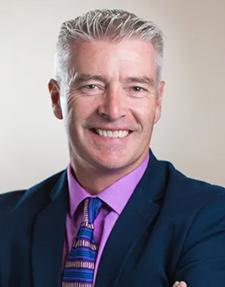
Taking It Out of PE: Transfer of Student Motivation
Friday, April 4 | 8-9 a.m.
A ubiquitous goal of physical education is that students learn the skills, knowledge and motivation to engage in a lifetime of healthful physical activity. Despite this proposition, there remains limited evidence of the connection between students’ experiences in physical education and their choice to be active in their leisure time. This lecture provides a summary of the authors’ empirical research over the past two decades that has examined what motivates students to “take it out of PE.”
Following the completion of his Ph.D. in 2004 at The Ohio State University, Dr. Tristan Wallhead has worked in the Division of Kinesiology and Health as a physical education teacher education professor at the University of Wyoming. He has continued to conduct research on how to create pedagogical environments that promote the transfer of student motivation from physical education to extra-curricular PA contexts. He was inducted as an AAHPERD (now SHAPE America) Research Fellow in 2013 and was the 2024 UW College of Health Sciences Distinguished Investigator. He is both locally, nationally, and globally engaged with this work by serving as the vice-president for the International Physical Education and Sport Pedagogy Association (AIESEP) and currently serves as the Academic Chair for the Wyoming International partnership.